
This is part of a continuing series on Daniel, listen to the other sermon on our sermon archive.
Priority is a singular word, and a singular theme. For the longest time, from when it became a word, it only existed as singular. Priority. But then in the 1900s, we pluralised it. Only in the 1900s did "priorities" (plural) even become a concept.
A priority is what you focus on the most. What's at the top of your pyramid of importance. What you really chase after. We can use the plural "priorities" all we want, but every person, every heart, only has enough room for one priority.
The Middle-Class Path to Success
This story starts with success. We humans all have an idea of what that can look like. Our current middle-class path to success is this:
Work hard in school, go to university
Get a good job
Get married
Buy a home
Have some children
Work hard at your job
Retire and live peacefully, tending a garden
There doesn't have to be anything wrong with that. It's just that if any of those things become our priority, everything else gets wrongly arranged. Order becomes disorder. Every heart only has enough room for one priority.
When we spend our lives building our empire (like middle-class success), it will come to nothing. It will because bad things happen. It doesn't matter if you're good or bad, if you are a Christian or not—bad things happen. That's a guarantee in this world. So if we have the wrong priority in our hearts, when bad things happen to us out there, we get a vision of our empire as it truly is: nothing but rubble in the end.
In the meantime, as we strain and struggle for different priorities, we get anxious because we don't have enough. We get fearful because we're not in control.
Three Paths in Crisis

When a crisis comes, we can take one of three paths: go aggro, numb up, or surrender.
Go aggro: Work hard, more time, more effort, grit your teeth to get through whatever you need to get through.
Numb up: Pretend whatever it is isn't a problem. Watch Netflix, get drunk, spend time fantasising about holidays or trolling through property websites.
We are both, but you probably tend towards one over another.
The third way, the path laid out for us in Daniel chapter 4, is surrender. It's humility. It's giving up on trying to be god and giving in to the love that the real God already has for you.
Comfort Doesn't Protect Us From Crisis
This chapter starts out where we all want to end up. Daniel 4:4: "I, Nebuchadnezzar, was at home in my palace, contented and prosperous."
To be at home, in a palace, contented, prosperous—isn't that what we all want? That sounds pretty good. If you are the most powerful person in the world, you can make that happen.
But the very next verse introduces a problem. He has a dream, not just any kind of dream, but something that disturbs him. He can't even understand the dream itself, but he's terrified.
This move between verse 4 and 5 tells us something crucial: Comfort doesn't protect us from crisis.
Just one chapter ago, we looked at the fiery furnace, and that was real. So is this. In fact, to believe that crises aren't real is just to live in some kind of fantasy land. If we want to live in the real world, we have to know that crises are real and they come to everyone.
The Illusion of Control
Nebuchadnezzar had everything the world could offer. Everything he wanted and many other things he didn't even want but had access to. The richest, most powerful man in the world. He's called the king of kings for a reason. He is the 1%.
But even Nebuchadnezzar, who had everything this world can offer, can't protect himself from crisis.
I think this is important for all of us to hear. If Nebuchadnezzar was around today and was with a typical person today, he would be amazed. Surely he's in the presence of royalty! Houses with multiple rooms, food, running water, WiFi! To have money to pay someone else to make your food, to not have to work until you die—that's royalty level!
Like Nebuchadnezzar, we spend a lot of time chasing a palace. Looking for contentment in material things. Spending our prosperity on ourselves. One of the reasons we do this is this ridiculous idea that somehow comfort is going to ward off crisis. We may not pray incantations and light incense to appease a god, but we have attempted to appease a god.
The Bubble Wrap Mentality
I think we view comfort like bubble wrap. You know that stuff you can pop or annoy others whilst you pop. We get a lot of that, wrap ourselves up, maybe wrap those we love up in it too. That takes a lot of time, a lot of effort, a lot of money. We can, and do, spend a lifetime doing just that. How do we treat education? How do we treat buying houses? How do we treat our friends? All just different layers of bubble wrap around ourselves so we can protect ourselves against a crisis.
Here's the thing: with small things, it can work. Hunger, homelessness, all that. There is a way to protect ourselves against these things. Of course, comfort in itself isn't bad. But we try and hoard it, don't we?
In fact, we find that storing up comfort does work here and there, so why not keep going? Let's keep wrapping up and up.
But there are things that no amount of bubble wrap can protect us against. Crises come for us all. No amount of comfort can undo that.
Crisis will come to everyone, regardless of our comfort in this world. But the Bible goes one step further: Comfort leads to crisis.
Pride: The Foundation of Our Empires
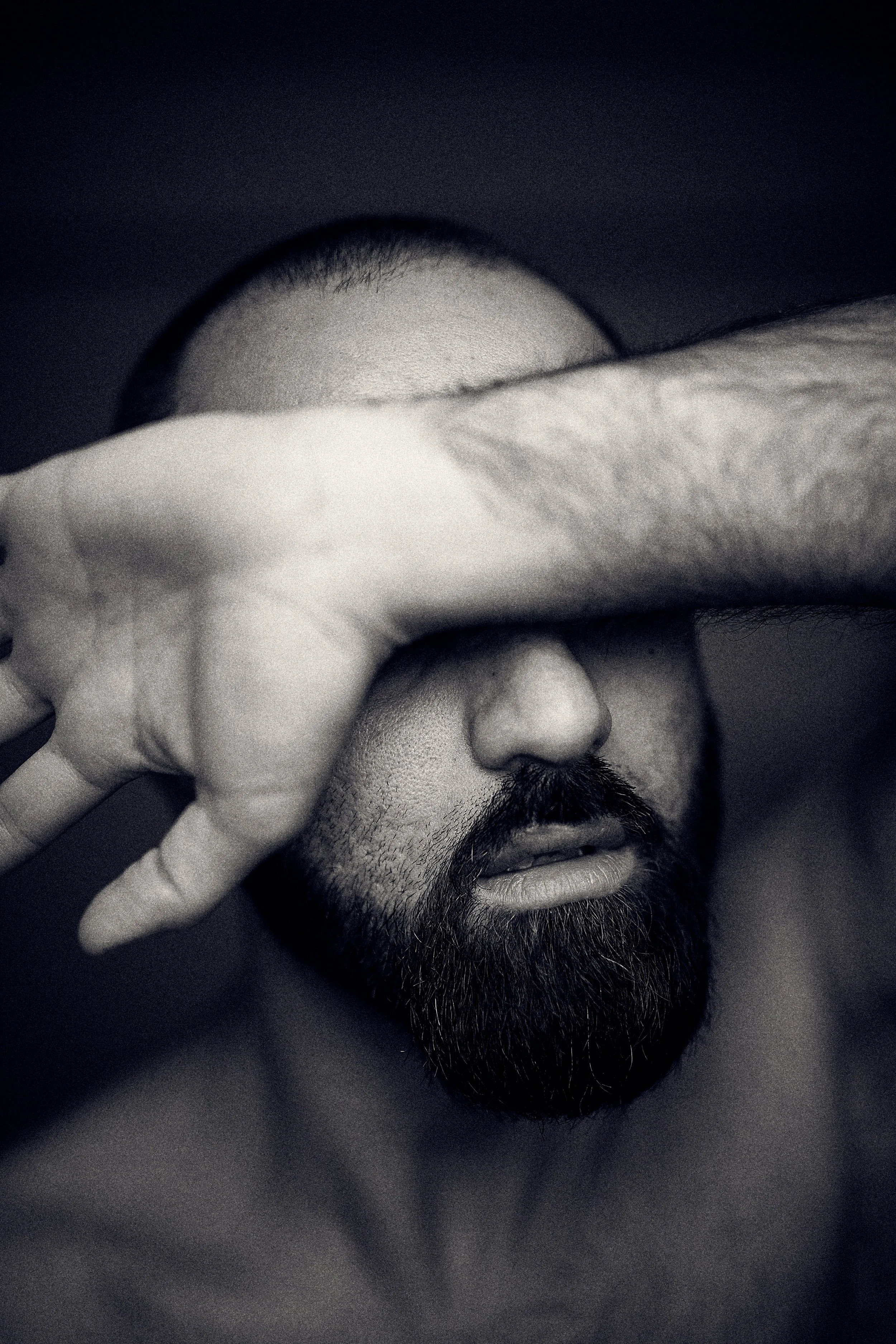
Seeking comfort first will always lead to crisis because comfort is a killer! Isn't that ironic? We hoard comfort for ourselves to protect ourselves, but it ends up being our downfall.
This is the way of empire. In fact, our pride, our hubris, is the foundation we lay for the empires we create.
In our pride, we gather for ourselves a good life—on our terms, in our own way.
Let's look at where this comes up. When Daniel gives his advice to the king on how to avoid a catastrophe, it's to renounce sin and do what is right.
Daniel 4:27: "Renounce your sins by doing what is right, and your wickedness by being kind to the oppressed. It may be that then your prosperity will continue."
It's only when Nebuchadnezzar embraces humility instead of pride that things go well for him.
Daniel 4:37: "Now I, Nebuchadnezzar, praise and exalt and glorify the King of heaven, because everything he does is right and all his ways are just. And those who walk in pride he is able to humble."
Pride is what was behind this particular crisis for Nebuchadnezzar. The building blocks for his empire was pride. As it is for ours as well.
When Crisis Comes From Our Sin
We also find out the path for Nebuchadnezzar's pride was using his own prosperity for himself. He isn't being kind to the oppressed. If Nebuchadnezzar was a good leader, he would use his prosperity for the oppressed, not oppress them more.
Now of course, not every crisis is a product of our sin, but some are. Bad things happen to good people all the time. Natural disasters, scary diagnoses, losing jobs. Just because there is a crisis doesn't mean it's a direct correlation to something we did or didn't do.
But this story is about the crises that come upon us because of our sin:
If you don't treat your friend or partner well, the consequence is they may not hang around.
If you lie or cheat on something, the consequence is a guilty conscience and others finding the truth.
If you live a life of greed and comfort, the crisis is a life that will never have enough. And you miss out on the joy of generosity.
If you don't follow the path that God makes clear in His Word, don't be surprised when you end up stuck in the hedges.
We're like Nebuchadnezzar in that we don't first think of God's kingdom. If we were to follow God's commands in our lives, we would use whatever wealth or money or power we have for others first, not ourselves.
The prophet Haggai, who is in a similar historical situation but after Daniel, addresses God's people saying: "Is it a time for you yourselves to be living in your panelled houses, whilst this house remains a ruin?" (Haggai 1:4).
Basically, you have your own fine houses, and because of that you are overlooking the building of God's house. We need to be confronted with how we seek after comfort.
Actually, it's a gracious act to let people know they are off the path. If you are out on a walk in some remote forest and it's dense, it's a helpful thing to have waymarkers along the path. They tell you: here is where it is good for you. Going off the path? Not so good for you. There are thorns, cliff edges; you could get lost in there. Stay here and you can truly enjoy the path.
When we seek after comfort first, we will walk headfirst into a crisis. Maybe you're in some aspect of that now. If you aren't, you will be. Let that crisis do to you what it did for Nebuchadnezzar. He saw the waymarker for where it was and went back to the path.
But he didn't get there himself! He had help; he needed help.
Understanding what it means to be a Christian includes recognising our need for help in crisis rather than relying on comfort alone.
Calling Others to More Life
Nebuchadnezzar called on Daniel. Why? He knew Daniel had, as he put it, "the spirit of the holy gods" in him. Daniel's boss's boss knew he followed God. Do people in your workplace know this?
But in addition to that, Daniel was good at his job: "no mystery is too difficult for you" (verse 9).
So Daniel has a foundation of faith that allows him to be good at his job. People in his workplace know about both of these things. In chapter 1, we looked at what it means to be excellent and keep excelling in your job and how that brings glory to God.
We see the man with all the power needing help from an exile of a country he invaded. Where is power really? In accumulating comfort? No, it lies with the Most High God. God doesn't limit Himself to work in people in high places; He works with people in all places.
The Risk of Speaking Truth
When Daniel is called to interpret the dream, he hesitates. He's afraid.
Daniel 4:19: "He was greatly perplexed for a time, and his thoughts terrified him. So the king said, 'Belteshazzar, do not let the dream or its meaning alarm you.'"
The king had to prod him a bit: out with it, man!
Daniel doesn't give in to fear. He takes the risky step of obedience. A person in a place of weakness calling the powerful to repent. Daniel tells Nebuchadnezzar the same thing we need to hear today: renounce the empire within!
You are in places now where others need you to help them in their crisis. Who might come to mind? It doesn't have to be life-threatening, but everyone is facing some kind of battle, some kind of crisis. Some people do need to hear difficult and loving words. Let's not be so nice that we avoid being a person filled with God.
In fact, we shouldn't always be dragged into this; we should seek this out. As we do, you will find that, like Daniel, God will give you insight. Gifts. Sometimes in ways that are beyond natural explanation. God is a supernatural being, so let's not be surprised that there are supernatural gifts, right?
What would it look like to call someone into more life with God? Whether someone who is a Christian or not, every single one of us has steps before us—steps marked out on the path. Every single one of us needs others to help us see that step.
Did you know the primary way people grow in the Bible is because someone else is there calling them to something more? That next step. This requires us to grow a spiritual imagination for others, requires us to rely on God to provide what we need for others: natural or supernatural. You aren't just a character in your own story; you are connected to so many other stories!
As a church in Manchester, we're learning together what it means to speak truth in love and call one another to faithful living.
Look Up to Get Out
You have ended up in the hedges a bit. A crisis is either there or looming in the background. What to do?
Look up to get out. Nebuchadnezzar has this crazy dream where he does go crazy, acts not even human, which is supposed to teach him and us that when we follow a life of empire, it destroys our humanity. But what ended it?
Daniel 4:34: "At the end of that time, I, Nebuchadnezzar, raised my eyes towards heaven, and my sanity was restored. Then I praised the Most High; I honoured and glorified him who lives forever."
Daniel 4:37: "Now I, Nebuchadnezzar, praise and exalt and glorify the King of heaven, because everything he does is right and all his ways are just. And those who walk in pride he is able to humble."
He renounced the empire within, his pride. And he praised God. Look up to get out.
Faith in Crisis or Faith Put in Crisis
The faith Nebuchadnezzar had was in himself. When we have faith in ourselves, our faith will eventually be in crisis, shaken up.
Daniel had faith in God, and that meant he could rely on his faith, even in crisis.
Your faith will either be put in crisis or will allow you to go through crisis.
The antidote to faith in ourselves, to our pride: looking up. Restoration comes from looking up. The parts of your life that have strayed from God's path—think about what they are (because you're not perfect, they're there). In those parts, where you're stuck in the hedges, look up to get out.
There are so many commands in the Bible to look up. To raise our eyes. To set our hearts on things above. Raising our eyes raises us up!
In order to look up at something, one must position themselves lower. So we lower our heads in order to look up.
This is what Jesus means when He says: "Whoever wants to be my disciple must deny themselves and take up their cross daily and follow me" (Luke 9:23).
Not just one time—daily. To deny yourself means to give up on the idea that you know best. It's to give up on the idea that your path is the one you'll take. It's to surrender to the good path God, our gracious God, has laid out for you.
This is where God's power at work in this world is a real comfort for us in this crisis-laden world. Because if we're in charge, we get anxiety. If God's in charge, we get comfort—the real kind.
Jesus tells us in Matthew that He feeds the birds and clothes the flowers. We are worth so much more than those things to Him. So if God is in control, that frees us from being in control (aka pride), and we can lower our heads to look up.
Then we can untangle ourselves from these hedges. That empire that casts its long, cold, dark shadow—the thing that seems to have all the power—can all be undone when we look up.
To "look up" is about belief and action: to believe that God is God (and therefore we are not) and to act accordingly. Not just cheap words.
Exploring how to have a meaningful life means understanding this call to look up and surrender our prideful empires.
Jesus: Lifted Up So We Can Look Up
When we look up, what do we see? We see the risen Christ. In fact, Jesus was raised up so we can look up.
Jesus tells us in John 12: "And I, when I am lifted up from the earth, will draw all people to myself" (John 12:32).
The way down into death was the way up for Jesus.
If death comes before resurrection for Him, for everyone who says they follow Him, we have the same path. Death always comes before resurrection. This is why it's good news to carry our cross daily, because it means we get to die daily to everything that holds us back—our sin—it holds us back from God Himself.
In dying to what tempts us to jump into the hedges, we get to rise with Christ.
No Resurrection Without Death
Death always comes before resurrection. In fact, there is no resurrection without death. We can't bypass it. No amount of comfort accumulation will help you avoid the deaths you need to take or the crises that come after you. So when we build our lives up in comfort, what we're doing is avoiding the very thing we need. Look, I know it doesn't feel good to die to yourself, yes, I get it. But it is such a better life.
One of the reasons Jesus died and rose again is so that you would die to all the ways of empire.
1 Peter 2:24: "He himself bore our sins in his body on the cross, so that we might die to sins and live for righteousness; by his wounds you have been healed."
Dying to sins and living for righteousness is how we are healed. It's wholeness.
In Jesus' one-time death and resurrection, we too, when we first believe, are brought into all that He has to give us. A one-time belief that leads to lifelong believing. This is wholeness. This is how to not embrace the shadow of empire and how to live joyfully, freely, generously in the light of God's path.
The biggest crisis there is, the one that every single one of us will face, is death. When we die, for those whom Jesus has saved from death, we find there is new life.
2 Timothy 2:11: "If we died with him, we will also live with him."
One time, forever, always on, never going to sleep. Without Him, death is a crisis that nobody will be able to get through. Because of Him, death need not even be a crisis anymore.
As a church in Manchester, we're discovering together what it means to look up to get out—to find in Christ the only comfort that truly protects us, not from crisis, but through it. Learning to trust God in difficult times and surrender our pride is the path to true wholeness.