

The world is full of meaninglessness, but that feeling is not the end of the story. According to Ecclesiastes, the wisest person who ever lived felt it too, and he points us towards the only thing that can genuinely satisfy the deepest longing of the human heart.
We Have Everything, and Yet…
Think about the world we live in. Most of us in the UK do not go to bed genuinely uncertain about whether we will eat tomorrow. We have roofs over our heads, supermarkets stocked with food from every corner of the globe, and a small device in our pockets that connects us to almost anyone on earth in an instant. We can fly to another continent and be fed a meal at 35,000 feet. By almost any historical measure, life is extraordinary.
And yet something is clearly wrong.
Suicide rates in the UK remain at troublingly high levels. Roughly one in six adults experiences some form of depression. Anxiety disorders affect millions. With all the comfort and convenience we could ever want, we are not, as a society, flourishing in any deep sense. We are materially comfortable and spiritually adrift.
This is not a new problem. It is, in fact, an ancient one. And one of the most honest books ever written addresses it head-on.
What Ecclesiastes Is Actually About
Ecclesiastes is a book in the Old Testament, written by Solomon, son of Israel's famous King David. Solomon was renowned as the wisest person who had ever lived. He had wealth, power, pleasure, and intellectual achievement beyond anything his contemporaries could imagine. And at the end of it all, this is what he concluded: everything is meaningless.
That is not a comfortable starting point. But there is a reason Ecclesiastes resonates so deeply with people, even thousands of years after it was written. It describes our experience with unusual precision. That feeling of restlessness. The sense that you are reaching for something just out of grasp. The strange dissatisfaction that settles in even after you have achieved exactly what you were chasing. Ecclesiastes names all of it.
Crucially, the book is not designed to lead us into despair. It is designed to lift our eyes beyond what we can see on the horizontal plane, so that we might find a life of genuine meaning, happiness, and satisfaction. For a culture like ours in the West, so comfortable materially and so uncomfortable spiritually, it could not be more timely.

The Hebrew Word That Changes Everything
At the heart of Ecclesiastes is a single repeated word. In Hebrew it is hevel, and it appears thirty-six times across the book's twelve chapters. Older English translations rendered it as "vanity," but the original meaning is richer and stranger than that. Hevel means vapour, breath, a wisp of wind. The kind of thing you reach for and find nothing in your hand.
The book's famous opening declaration describes all of life under the sun as hevel: utterly empty, a chasing after the wind (Ecclesiastes 1:2).
What makes this word so interesting is how it gets used elsewhere in the Bible. There are three distinct contexts. First, hevel is used to describe false gods and idols, things that look substantial but have no real content. Second, it describes wasted human effort: the painful feeling of having laboured for nothing, or of suffering that seems to serve no purpose. Third, and this is the heart of Ecclesiastes, it describes a longing that never gets satisfied. An unmet desire. The sense of reaching and reaching and never quite arriving.
This maps onto a helpful distinction between ends and means: the goals we pursue and the methods we use to pursue them. Hevel covers both. The thing you are aiming for might be empty. But the way you are going about it might be equally empty. And here is what Solomon is pushing us to see: good intentions are not enough. Meaning well does not give you meaning. You can be sincerely and energetically chasing after something that turns out to be nothing but vapour.
This is a sobering thought. We spend so much of our lives organising ourselves around particular goals, sacrificing other things in their pursuit, and rarely pausing to ask whether the goal itself is worth what we are giving up for it.
Why This Rings True
It is striking how often contemporary culture, even without meaning to, captures exactly this feeling.
Bob Dylan's "Blowin' in the Wind" has been sung with a smile by millions of people who know, on some level, that the questions it asks have no satisfying answer under the current order of things. Billy Corgan of the Smashing Pumpkins put it more bleakly on Mellon Collie and the Infinite Sadness (a title that could almost double as a subtitle for Ecclesiastes), describing emptiness as a kind of chain reaction leading to the conclusion that God too is empty, and by extension, so is everything else.
The novelist John le Carré once described his entire body of work in terms that could have come straight from Ecclesiastes. Each book, he said, was a search for a secret suitcase hidden in a locked room. You search and search until you finally find it. Then you open it. And it is empty.
We recognise this. We pass memes around because they capture the feeling of barely holding it together in the middle of an ordinary Tuesday afternoon. We listen to sad songs and feel strangely comforted, not because sadness is pleasant, but because being understood is.
There is even a haunting detail in the very first appearance of the word hevel in the Bible. In Genesis 4, the second human being ever born is given the name Abel, which is simply the proper name form of hevel. This child, whose name means breath or vapour, is murdered. And with him, we might ask, are our hopes of being fully alive also killed?
How We Try to Run Away
Because sitting with this reality is uncomfortable, we tend to cope by fleeing in one of two directions.
The first is denial. We keep our heads down and keep going. We stay busy. We scroll. We buy things. We fill every quiet moment with noise, because Blaise Pascal identified in the seventeenth century what is even truer in the twenty-first: that all of humanity's problems stem from our inability to sit quietly in a room alone. If busyness was an escape then, it is an industrial-strength escape now. We can deny the meaninglessness of life simply by refusing to think about it too carefully, and modern life provides almost limitless opportunities to do exactly that.
The second response is more philosophically sophisticated, but it leads to the same place. Rather than deny that life is meaningless, we embrace the idea and decide to manufacture our own meaning in response. We get to choose what matters. We build our own framework of significance. This is, broadly, the existentialist position, and in a secular age it has become the default assumption of many people. The problem is that it places an enormous and ultimately unsustainable weight on the individual. If I must create my own meaning, and if I do not quite manage it, then my life truly is nothing but vapour.
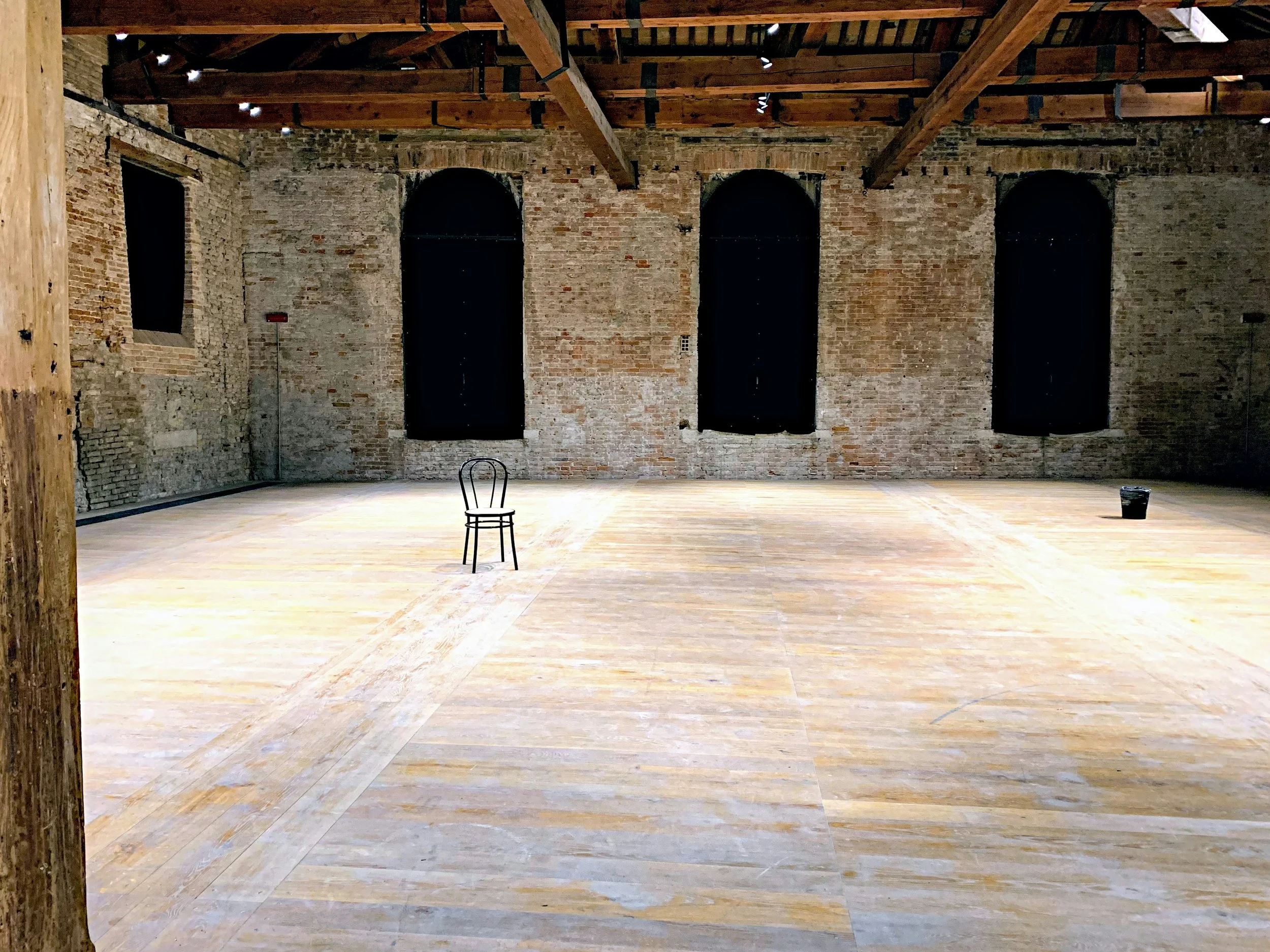
There is also a subtler problem. You can have all the right motivations and still be heading somewhere that cannot ultimately bear the weight you are placing on it. Ecclesiastes 1:14 says that everything done under the sun, all of it, is a chasing after the wind. The means and the ends alike. The romantic notion that another person can be the source of all meaning for you does not survive a clear-eyed look at mortality. When one of you is standing at the other's graveside, what happens then?
Whether we are denying the emptiness or trying to fill it ourselves, we are adrift in the same sea. And we need something more than our own effort to be rescued. If you are interested in how that feeling of restlessness shows up even in our patterns of generosity and consumption, The Practice of Generosity: Rebelling Against the Consumerist Industrial Complex explores exactly that tension.
The Longing That Points Beyond Itself
Here is something important: the longing itself is not a mistake. Ecclesiastes 3:11 says that God has set eternity in the human heart, even though no one can fully fathom what he has done from beginning to end. That ache for something more, that sense of homesickness for a place you have never been, is not a defect to be corrected. It is a signpost.
We are, each one of us, made for more than this world can deliver. And instead of sitting with that longing and letting it point us somewhere, we tend to pick up whatever is nearest and try to build a home out of it. A career, a relationship, a lifestyle, a cause. None of these things are bad in themselves. But none of them are home. The rain leaks in. We wake up still hungry.
This is precisely why Ecclesiastes is not a book about giving up. It is a book about lifting your eyes. Life under the sun, when that is all there is, produces only meaninglessness. But there is a God of heaven who has crammed meaning into this world. The trouble is that we cannot see it if our eyes never leave the horizontal.
What We Can Run Towards
The sermon series at our church in Manchester is not designed to make anyone feel hopeless. Quite the opposite. The book itself ends in hope. Its conclusion calls every human being to fear God and keep his commandments, because God will bring everything into account (Ecclesiastes 12:13–14). That is not a threat: it is a promise that nothing is ultimately lost or wasted, that the universe is not indifferent, and that there is someone who holds the whole story in his hands.
But Ecclesiastes also points, subtly, beyond itself. Solomon introduces himself as the son of David, the wisest king. And his wisdom, extraordinary as it is, gestures towards another son of David, one who does not merely give us wisdom but gives us his own life.
Jesus entered the meaninglessness of this world. He was not insulated from it. If anyone understood what it meant to be without a settled home, it was him. He saw hevel clearly, all the grasping and striving and suffering of human life, and he was moved by it. But it did not overwhelm him, because he came to do something about it.
The cost of breaking us out of our cycle of chasing after meaningless ends by meaningless means was the cross. Jesus took on everything that holds us back from true meaning and carried it through death, so that the way back to a life of genuine significance could be opened.
In his resurrection, the old pattern of endless striving is broken. Something new becomes possible. The Spirit of God enters human hearts to keep the fire of that new life burning, to direct us back towards home when we wander, and to fill us with a joy that does not depend on our circumstances cooperating. If you want to explore what that new kind of life looks like in practice, The Practice of Abiding: Uncovering the River of Life Beneath Our Feet is a good place to start.
Ecclesiastes 9:7 puts it beautifully: go, eat your food with gladness, and drink your wine with a joyful heart, for God has already approved what you do. In Christ, that is the invitation extended to every person. Not a life of striving to be worthy of meaning, but a life of receiving it, freely, and giving it away.
A Song for Someone Who Needs Somewhere to Long For
The band Kings of Convenience once described their music as "a song for someone who needs somewhere to long for." That is a perfect description of Ecclesiastes too. It is written for people who feel the ache, who know that something is missing, and who are tired of pretending otherwise.
If you are in that place, you are not alone. And the answer is not to try harder, buy more, or lower your expectations. The answer is to let the longing lead you somewhere real.
At Redeemer Church Manchester, we are exploring Ecclesiastes as a community, not because we have all the answers, but because we believe the questions it raises are exactly the right ones, and that the God it points towards is more than capable of meeting us in them. If you are wrestling with questions of meaning in a city like Manchester, you are welcome to join us. We meet on Sunday mornings and there is no prior knowledge or background required.
For more on how the search for meaning connects with the whole shape of a life, you might also find How to Have a Meaningful Life and Living in Babylon as a Christian worth reading.
Frequently Asked Questions
What does Ecclesiastes say about the meaning of life?
Ecclesiastes is unflinching about the fact that life "under the sun," meaning life lived purely on the material and horizontal plane, produces meaninglessness. The Hebrew word hevel (vapour, breath) is used thirty-six times to describe everything from false idols to wasted effort to unmet desire. But the book does not end in despair. Its conclusion calls human beings to orient their lives towards God, because only when our lives are anchored in something beyond the visible world can they carry genuine meaning.
Is Ecclesiastes a pessimistic book?
It is honest rather than pessimistic. There is a difference. Ecclesiastes describes the experience of meaninglessness with unusual precision, which is part of why it connects with so many readers across very different cultures and centuries. But its purpose is not to confirm that everything is pointless. It is to show us that a life organised only around earthly goals and earthly methods will always feel empty, and to push us to lift our eyes beyond that horizon.
Why does life feel meaningless even when things are going well?
Ecclesiastes 3:11 suggests that God has set eternity in the human heart. In other words, we are made for something more than this world can deliver. When life is comfortable and yet still feels hollow, that hollowness is not a malfunction. It is more like a compass needle pointing somewhere. The discomfort of a good life that still does not satisfy is actually one of the most honest signals we have that we were made for more than what is visible.
What is the Hebrew word for "meaningless" in Ecclesiastes?
The word is hevel, sometimes transliterated as hebel. It literally means vapour, breath, or a wisp of wind: something that is present for a moment and then gone when you try to grasp it. Older translations of the Bible render it as "vanity," though that word has picked up connotations of pride and self-importance that are not part of the original meaning. "Meaningless" captures the sense better, though even that does not quite convey the full range: hevel covers false goals, wasted effort, and deep unmet longing all at once.
How does Jesus relate to the themes in Ecclesiastes?
Solomon, who wrote Ecclesiastes, identifies himself as the son of David. Christians understand his wisdom to point forward to another son of David, Jesus Christ, who does not merely offer wisdom but offers himself. Where Solomon diagnosed the problem of meaninglessness, Jesus addresses it. He entered the emptiness of the world, was moved by it, suffered within it, and through his death and resurrection opened a way out of the endless cycle of chasing after things that cannot satisfy. In that sense, Ecclesiastes is best read in the light of the gospel: the problem it names, Jesus resolves.
Can a secular person find value in reading Ecclesiastes?
Yes, very much so. Ecclesiastes does not require any prior religious commitment to resonate. It begins with observation and experience, the kind of honest audit of human striving that anyone can recognise from their own life. Many readers who are not religious find it one of the most searingly accurate descriptions of modern experience they have ever encountered. The conclusions it draws are theological, but the journey there is deeply human and widely accessible.
What does "chasing after the wind" mean in Ecclesiastes?
The phrase appears alongside hevel throughout the book and captures the same idea from a different angle. Chasing after the wind describes the experience of putting enormous energy into pursuing something that cannot actually be caught. It is not that the effort is lazy or insincere: it is that the object of the pursuit is by nature uncatchable. Ecclesiastes uses this image to describe the way human beings invest their whole lives in goals, whether wealth, wisdom, pleasure, or status, that feel just within reach but always slip away before they can be held.
How does Redeemer Church Manchester engage with questions like these?
As a church in Manchester, Redeemer takes these questions seriously and tries to engage with them honestly, without pretending they are easy or that faith makes them disappear. The current sermon series on Ecclesiastes is part of that commitment: to look clearly at the difficult parts of human experience and to find in the gospel not an escape from those difficulties, but a genuine answer to them. Sunday services are at 10.00am at Oswald Road Primary School, M21 9DW, and everyone is welcome regardless of background or belief.